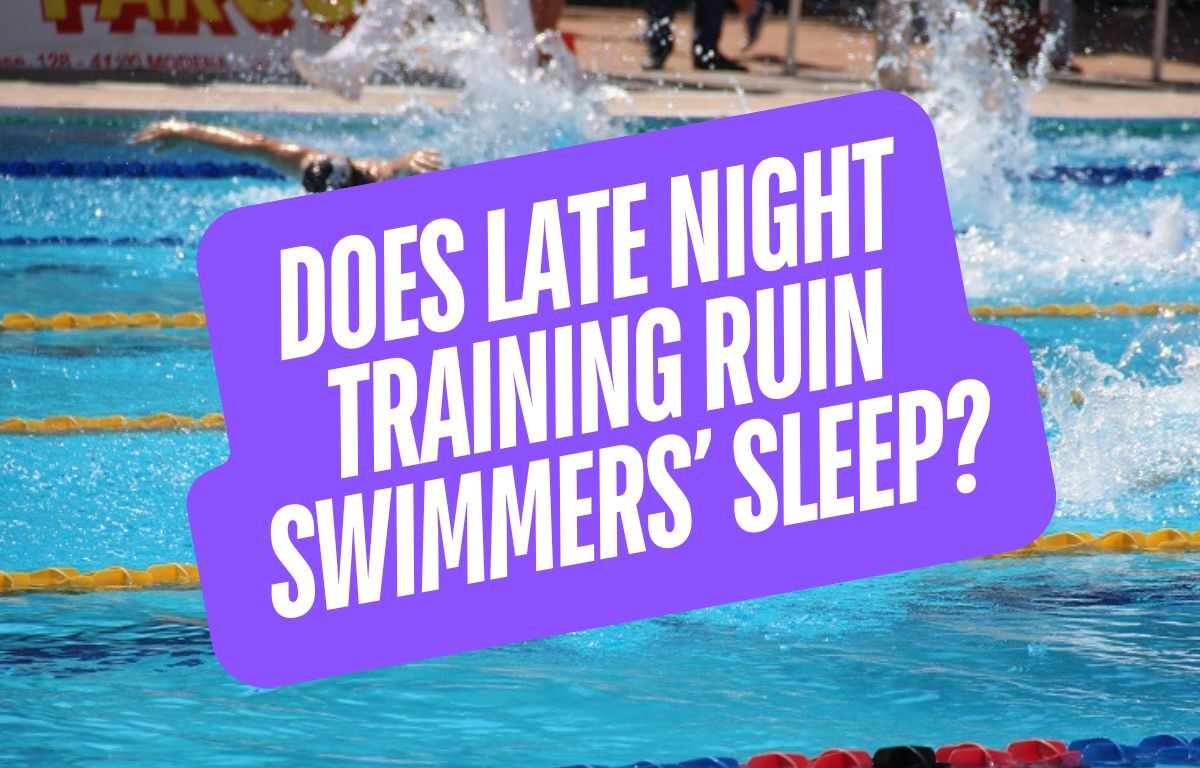

Does hard training later in the day change how you sleep at night? Here’s a look at how swimmers respond between the sheets after an aggressive late night swim workout.
Back in 2019, I was logging some serious miles in the pool. Ten sessions per week, up to 70,000m of swimming, plus dryland.
To cram all of that training around a 9-5 work schedule, this meant training late. The final lap swimming window at my local pool ran from 8:00 to 10:00, after the crush of clubs and lessons had cleared out.
By the time I got home, ate some food, and decompressed, I often wouldn’t drift off to sleep until around midnight.
And usually, sleep wasn’t a problem. Swimming lots will do that.
But looking under the hood, was I actually getting good sleep?
A small study with collegiate swimmers tested this out.
The Effects of Late-Night Swim Workouts
Late or later day swim workouts are a practical reality for many swimmers.
Whether it’s because it’s the only time there is lane space, or work and school commitments push training later, swimmers are often churning up the pool well into the PM.
Research with other athletes tells us that late night workouts can mess with our attempts at a restful doh-doh.
Oda and Shirakawa (2014) had participants do 40 minutes of high intensity running from 9:20 to 10:00pm at 80% of maximum heart rate. It took them longer to fall asleep, they slept less, and sleep efficiency declined.
Heart rate and core temperature were still elevated at bedtime and heart rate variability was more unstable. They had “large physiological excitement at bedtime” which then made it harder to fall and stay asleep.
Aloulou et al. (2020) also saw that high-intensity running done at 9:00pm reduced the amount of deep sleep in a group of endurance runners. They also had elevated heart rate and core body temperature at sleep.
So how about swimmers?
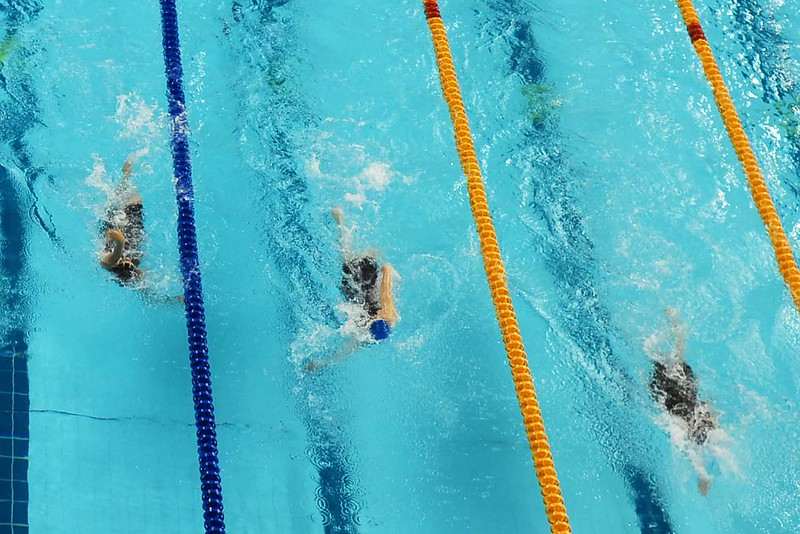
Researchers in Japan (Furukawa et al., 2026) took a group of 12 competitive swimmers and had them either:
- Do a high-intensity swim workout between 6:30-8:30pm
- Sit on their bum during the same time period
The main set of the workouts was really hard.
This wasn’t a bunch of easy or moderate swimming that would be easy to recover from, but training that dropped a lactate bomb:
- 10×50 freestyle all-out on 4:00.
- Lactate numbers reached 20.5 mmol/L
- Max heart rate got up to 172 beats per minute.
Swimmers followed that up with a ten-minute warm-down, ate dinner, and tucked themselves into bed at 11:00pm.
See also: Why Swimmers Need More Sleep (and How to Track It)
Sleep was then monitored to see when they fell asleep, how long they slept for, sleep quality, heart rate, core temperature, and heart rate variability.
So how did our swimmers sleep?
Mostly, pretty good.
Total sleep time went down by around 20 minutes, which isn’t huge. Something, for sure, but not to the point that it’s going to leave you wrecked the next day. Deep sleep was largely unaffected. And sleep onset was basically the same.
There were some sleep markers that worsened, though:
- Wake time after falling asleep went from ~3 minutes to ~24 minutes.
- REM sleep dropped by ~24%.
And what about subjective differences? Did swimmers feel less rested or like they’d slept poorly after the late(r) night swim?
Not really.
There were no big differences in:
- Ease of falling asleep
- Perceived amount of sleep
- General sleep quality
- Ease of waking up
- Morning sleepiness
So swimmers felt like they got a normal night of sleep, even though under the hood there were some clear signs that the late night swim had disrupted parts of their sleep and recovery.
Swimmers May Handle Late-Night Training Better Than Other Athletes
There are a couple of things that make late-night workouts different for swimmers.
The two biggies are heart rate and core body temperature. Both increase from aggressive exercise, and elevated levels of both make it harder to fall and stay asleep.
Swimming changes both in some subtle ways that suggest later PM workouts won’t crash your sleep in the same way as running or lifting weights.
- Heart rate. The pressure of the surrounding water reduces the amount of work your heart has to do to circulate blood (Wilcock et al., 2006). This means that heart rate spikes in the water are lower compared to similar-intensity training outside of it.
- Body core temperature. Water sheds heat away from the body much more effectively than air. And the temperature of the pool water (usually measuring “brrrr”) keeps core body temperature from going nuts.
Compared to aggressive dryland training, whether we are talking about running or lifting weights, training in the pool can keep sleep disturbance factors in check so that we can sleep a little easier after those late night swims.
Tips for Sleeping Better After Late Night Swims
Swimmers’ schedules are often at the mercy of pool hours, facility access, and team training schedules.
You train when you can train.
For swimmers who dabble with the late night swims, here are some tips for how to ensure that you can train hard and sleep great, too:
Warm it down.
The swimmers in this study did a 10-minute active recovery swim after the teeth-swimming-in-lactate 50s. The authors explicitly mention that this probably helped improve sleep scores by accelerating the fall of body core temperature.
If you are getting after big main sets late in the day, tack on 10-15 minutes of easy swimming to “calm” the system and help you sleep easier later.
Schedule dryland before the swim.
Swimmers are better positioned for later evening training because of the unique environment of the pool.
Water helps the body shed heat more efficiently, reducing core body temperature. Being in the water also makes it easier for the heart to circulate blood, keeping heart rate from spiking compared to working out on land.
Knowing this, stack aggressive drylands earlier in the evening, before the swim, if possible.
Be extra protective of sleep after high-intensity swims.
The session in this study was genuinely stressful—lactate levels of over 20 mmol/L and 170+ heart rate numbers are high stress in a way that high yardage aerobic swimming simply isn’t.
Even with a 2.5 hour recovery window, swimmers still saw sleep numbers change.
After sessions like that, prioritize a long wind-down to get the system back to baseline before bed.
Wrapping Things Up
Hard evening swim workouts create an interesting 1-2 punch.
On the one hand, when you get home and your swim bag hits the floor, you are exhausted. Especially if it’s your second swim of the day. The fatigue is real.
On the other hand, your body needs time to unwind and get back to factory settings. Even though you are tired, physiologically speaking your body and nervous system are still very much awake in the hours following hard training, which can make falling and staying asleep challenging.
So get after those hard PM swim workouts, but ensure that you add some active recovery to accelerate a return to baseline.
Plan big dryland sessions a little earlier in the evening than your swims.
And be extra intentional about recovery after high-stress swim workouts.