
Sleep is one of the most powerful performance tools swimmers have. Here’s how it impacts performance—and how you can track recovery to train harder and swim faster.
For generations of swimmers, those early morning drives to the pool are a rite of passage.
The 5:00am alarm. The quiet drive to the pool. The feels-like-icicles when you first dive into the water.
Early morning swims are common for a variety of reasons, not the least of which is that it’s one of the few times of the day that clubs can get lanes, and they come with a fairly obvious trade-off…
Reduced sleep.
A growing body of research shows swimmers and coaches what we already intuitively know—that swimmers who prioritize sleep recover better from raining, tolerate higher workloads, and ultimately swim faster.
Let’s jump in.
More Sleep Improves Race-Day Performances
Lack of sleep shows up in a lot of ways. Groggy eyes, cranky mindsets, and even how well you respond to the swim workouts you are stacking up in the pool.
A study (Lundstrom et al., 2025) tracked 26 NCAA Division I swimmers through one of the hardest training blocks of their season. Swimmers wore a WHOOP so that researchers could accurately track their sleep, workout strain, and heart rate.
And who swam fastest at the end of the trial? It was the swimmers who consistently slept longer each night. These swimmers swam faster and showed lower exercise heart rates, suggesting that the same training load was having less of a brutal effect on them.
The periodic good night of sleep can do wonders for swimmers as it leaves us feeling refreshed.
But when we line up more and more of them, our body can better absorb the punishment of swimming so that we can better punish our PBs on race day.
Good Sleep is Essential During Hard Training
Sleep is particularly important for swimmers that are going through it in terms of total training load.
While getting quality sleep can be surprisingly hard during heavy training blocks—pushing ourselves to the limit over and over again naturally disrupts hormonal balances, making blissful sleep harder to slip into—it remains one of the most important ingredients for showing up on race day ready to perform.
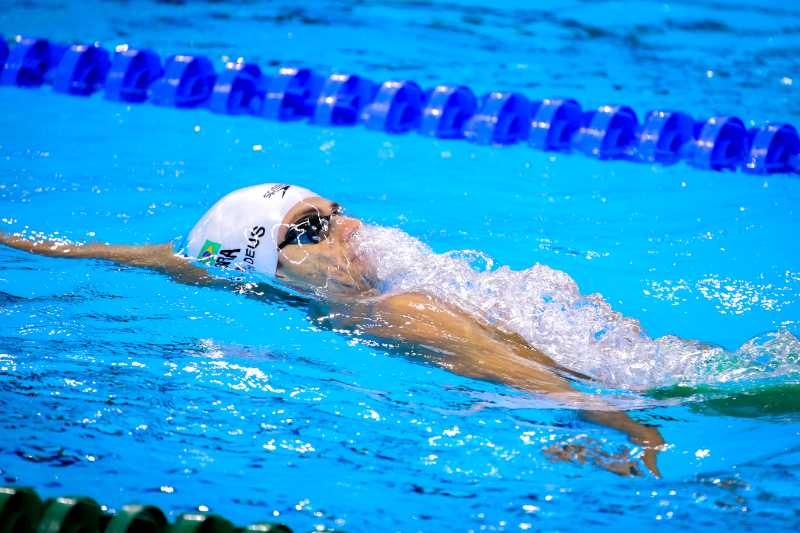
For example, Bretonneau et al. (2024) followed along as 26 elite French swimmers in the 13-week run-up to their championship meet. They tracked mood, biomechanics, swim performance, and sleep.
Swimmers that entered the taper phase in a state of functional overreaching—they were essentially wrecked in terms of fatigue—slept less and had poorer sleep quality compared to swimmers who had normal training fatigue.
You’d think that a two-week taper would be enough to drag the functionally overreached swimmers out of the deep hole of fatigue, but this was not the case.
They swam slower in competition than their PBs, regressing by around 0.49%, while the “tired but not destroyed” group of swimmers improved by nearly 2%.
The better recovery during hard training meant swimmers experienced the textbook taper response and swam fast when it mattered.
Good sleep habits mean swimmers enter the taper phase with less accumulated fatigue, leading to the “textbook” taper response and faster performances on race day.
Don’t Sweat the Occasional Bad Night of Sleep
While it’s tempting to go all-in on doing everything possible to get a majestic doh doh every time you hit the sheets—black-out curtains, sound machine, an icy room temperature—keep in mind that losing an hour of sleep won’t crush you.
For example, a recent study (Brandts et al., 2026) out of Germany did a super simple experiment with a group of 27 national level swimmers. They did two identical training camps—one in January, the other in October—and changed the morning session start time.
Early morning practice was either:
- 7:00am (for the “early” condition)
- 9:00am (for the “late” condition)
Researchers tracked sleep diaries, actigraphy, and a recovery and stress test, as well as time trials before and after the camps.
During the late morning condition, swimmers ended up sleeping for an additional hour. That extra hour, however, did not produce any significant improvements on recovery or swimming performance.
Think recovery in weeks, not nights. Recovery is built through consistent habits, not perfect ones.
Track Recovery, Not Just Your Workouts
Swimmers have reams of data to work with when it comes to tracking their swim workouts. Stroke rates, training load, stroke counts, average pace, heart rate, SWOLF scores, effort level—all the good stuff you know and love.
But tracking your sleep may just be the one of the best chlorinated bangs-for-your-buck when it comes to performance. At the very least, it will make you more aware of how well (or not) you are sleeping.
Fatigue accumulates over the course of the season, and having a better understanding of how long and how well your body is sleeping can be a big performance booster.
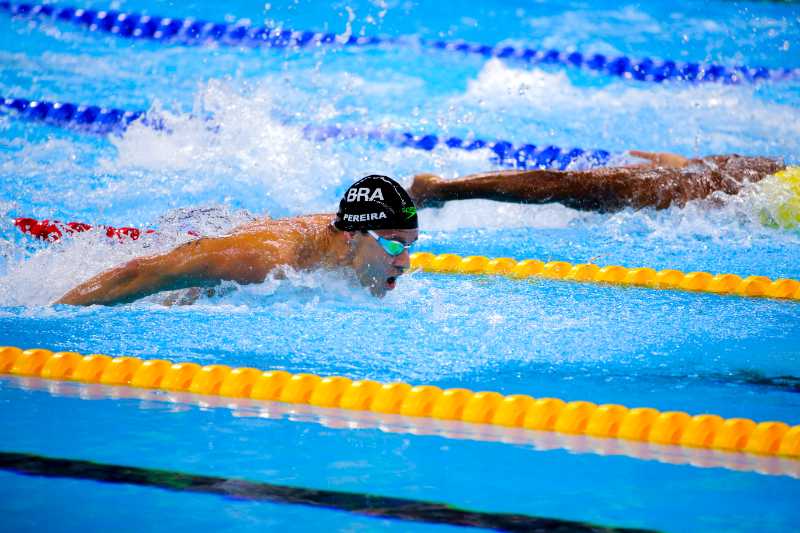
Most swim trackers can monitor sleep and recovery trends as well as what you are doing in the pool.
If you use a smartwatch for swimming or a tracker like WHOOP—which is recovery-oriented—here are the things worth paying attention to:
Heart rate variability
This is a sneaky good way to measure general recovery. Although it is best for trends and longer term tracking, a sustained drop alongside poor sleep is a strong indicator that your body needs some sleep and TLC.
Monitoring HRV is a great way to stay ahead of the longer term effects of sleep deprivation and fatigue.
Sleep duration
Staying on top of how much you sleep each night will give you the impetus to take bedtime more seriously.
Swimmers will always default to saying that their schedule makes it impossible to get lots of sleep—the studies mentioned above show that quality sleep is a choice.
So maybe a little less screen time in bed when you are supposed to be sleeping, right?
Daily wellness check
A quick check-in with yourself—how tired are you, what’s your mood like, how stressed are you—is a great way to stay on top of recovery.
Research with swimmers tells us that this measure syncs up remarkably well with more objective data like heart rate variability (Flatt et al., 2016).
File it away in the log on your smartwatch or training log each day and apply more sleep every time you see extended stretches of poor wellness checks.
Elite swimmers stay on top of the things that matter in the pool and outside of the pool, too.
Wrapping Things Up
Swimming is a sport that rewards hard work. The early mornings. Two-a-days. Long threshold sets.
But the hard work we put in between the lane lines is only part of the equation.
Research (and common sense) tell us that there is a cap on how much of our hard work can be expressed in competition when we don’t manage fatigue properly. Swimmers who consistently prioritize sleep recover better and manage fatigue more effectively are able to tap into all of that hard work when it matters.
Think in terms of weeks and months—avoid chasing perfectionism when it comes to your sleep habits. Don’t lose sleep (ha) over a bad night of sleep. Even a few bad nights of sleep won’t crater your performances.
But build the habits to get quality sleep, pay attention to trends, and use the tech available to you to track sleep quality and recovery state.