
The block phase is the most important part of the swim start. Here’s how to optimize it for more explosive starts.
To set up the block phase for a faster swim start, position your feet in a narrow stance, distribute your weight to maximize rear-leg loading, and place your strongest leg where it can produce the most horizontal force.
The start is a big part of race day awesomeness. For sprinters, a booming start is essential—it can account for up to ~30% of race time in the 50s.
And this all starts with optimizing the block phase. The stance, center-of-mass positioning, dominant leg positioning, and leg drive.
Here’s how to set up the block phase for faster starts.
How to Set Up the Block Phase: Stance, Weighting, and Leg Drive
The block phase begins the moment you get up on the block, settle into your stance, take your marks, and ends when your toes leave the block.
It sets the tone for what happens through the rest of your start. Swimmers try to generate as much horizontal force as possible while directing it forward.
Three things go into a powerful block phase:
- Stance
- Weight distribution
- Leg sequencing
Master these, and you start each race off right.
Foot stance width
A narrow stance typically produces faster block times and better horizontal force production than a wide stance.
A study (Matus et al., 2024) compared narrow stance (feet aligned almost behind the other) versus a wide stance (shoulder-width apart) in junior swimmers.
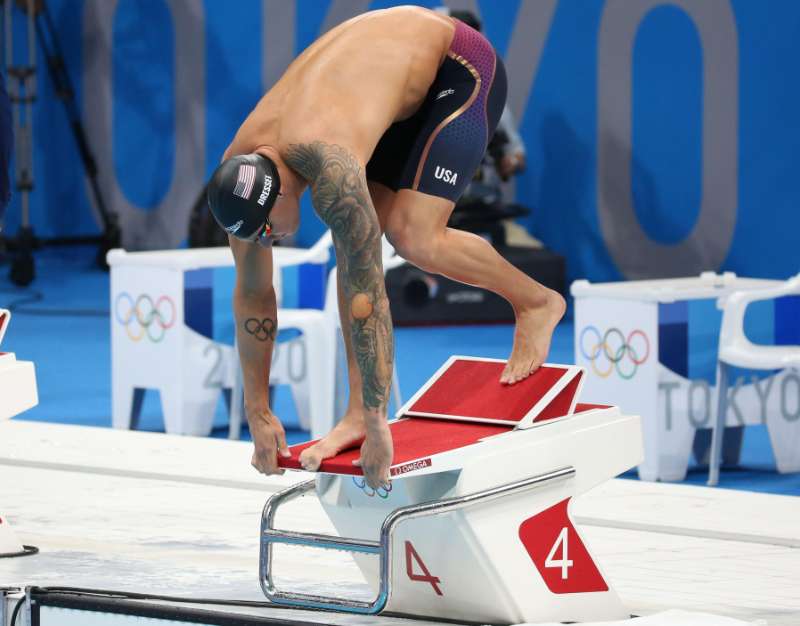
The narrow stance led to a faster block phase, but the speed advantage grew once the swimmers left the block, indicating that it wasn’t just a faster reaction but improved force generation.
A narrow stance raises your center of mass, which helps generate more horizontal force off the block.
Weight distribution
Swimmers have some choices when it comes to how they distribute weight on the starting block:
- Front-weighted – The hips are high and are perched near the front of the block. Helpful for faster reaction times, but less loading on the rear leg and increased reliance on the front leg, which powers vertical impulse in the start.
- Neutral weighted – Balance between power and stability
- Rear-weighted – The hips are drawn back slightly, like a sling shot. This stance more fully loads the rear leg, which is primarily responsible for horizontal force.
Most swimmers perform best with a rear or neutral-weighted position (Burkhardt et al., 2020), but some swimmers do better with a front-weighted stance (Kibele et al., 2015).
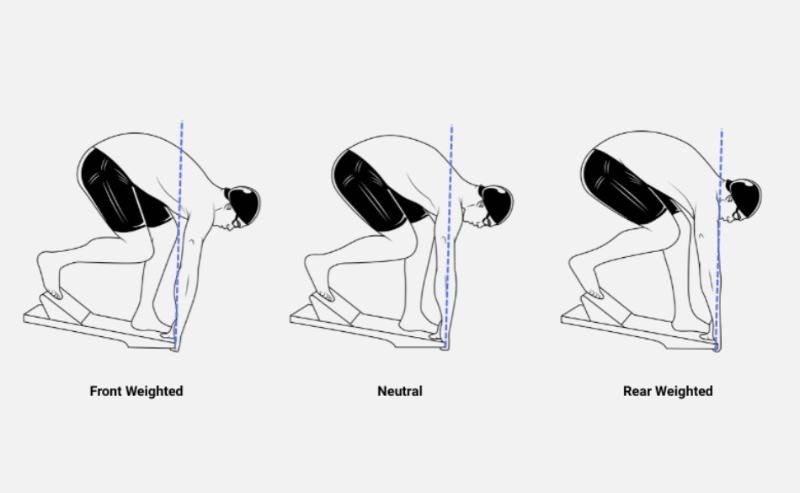
Once you have your stance locked in, where you place your weight (center of mass) changes how quickly and forcefully you leave the starting block.
Get your back knee right
The angle of the back leg is crucial for generating the power to get off the block fast and furious.
Matus et al. (2021) found that rear knee angle was the second most influential block phase variable predicting time to 5m (block time itself was number one). When swimmers produced their fastest starts, the rear knee angle averaged around 80°.
See also: Why the Start is so Important for Sprinters
Why does it matter? The rear leg is primarily responsible for driving horizontal impulse off the block. Too bent and you lose leverage. Too straight and force application plummets.
Should your dominant leg be at the rear?
Most swimmers should place their stronger leg in the rear position to maximize horizontal impulse.
In a track start, both legs drive you off the block, but they do so in different ways.
Force plate analysis (Burkhardt et al. 2023) shows that the back plate consistently produces more horizontal force and impulse than the front plate, no matter what leg is placed there.
Basically: the rear leg does most of the heavy lifting when it comes to launching you forward.
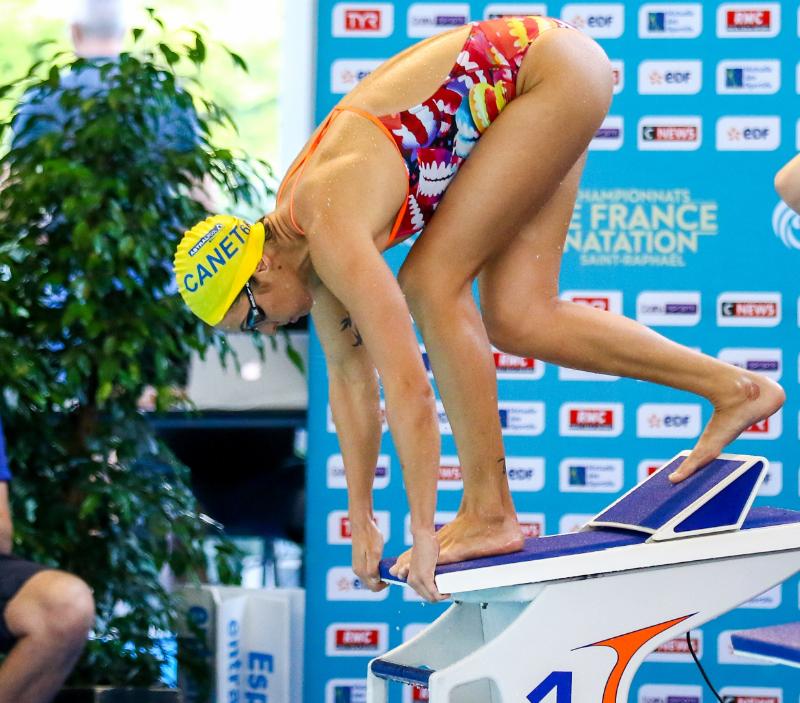
When swimmers switched their usual leg positions, performance declined:
- Slower time to 15m
- Lower horizontal take-off velocity
No matter the setup, the back plate remained the main source of forward propulsion.
Because of this, most swimmers should put their strong leg in the rear position. That way your dominant leg can shine at the job that matters most—getting horizontal off the block with rocket-levels of power.
That said, some swimmers may prefer the dominant leg in front if:
- They struggle with balance in the set position
- They want more control at the start
- They feel more stable reacting to the beep
But as a starting point? Strong leg in the back makes the most mechanical sense.
Block set up is individual
Most swimmers settle into a block setup early in their career and never revisit it. Familiarity feels comfortable. But comfortable isn’t always fastest.
A case study by Matúš & Kandráč (2019) had two competitive swimmers perform starts from every kick plate position and weight distribution on the standard start block—the OSB12.
See also: 7 Reasons Caeleb Dressel’s Start is the Best in the World
One swimmer’s fastest time matched his preferred setup. The other’s didn’t—his fastest time came from a configuration he wasn’t using in competition, and the difference was 0.082 seconds. Small, but for sprinters, meaningful.
Test every kick plate position under timed conditions, you may be leaving more time on the block than you realize.
Experiment with the kick plate
The kick plate—the angled wedge at the back of the starting block where your rear foot sits—is adjustable for a reason.
Changing its position changes the angles at your hips, knees, and ankles in the set position. And those angles influence how powerfully and quickly you can explode off the block.
A recent study (Matus et al., 2026) compared a traditional OSB12 starting block to a new and snazzy “double kick start” block with fully adjustable pedals on both feet. Similar to track sprinters’ starting blocks, where both feet sit on angled surface.
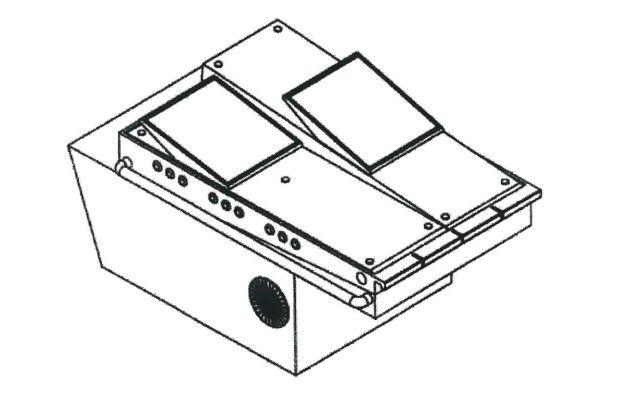
Performance improved dramatically with the pedals:
| Variable | Adjustable Block | Standard OSB12 Block |
| 5m Time (s) | 1.44s | 1.70s |
| Block Time (s) | ~0.62s | 0.78s |
| Front Hip Angle (°) | ~49-50° | 39.6° |
| Rear Hip Angle (°) | ~79-80° | 52.5° |
That’s a 0.26 second improvement to 5m—pretty good!
The adjustable pedals allowed swimmers to adopt a more open hip position in the set stance. Hips were higher. Less excessive hip flexion. On the standard OSB12 block, swimmers had lower hip angles, indicating a more cramped, flexed position.
The DKS block is not currently approved for competition—it’s a patented prototype—but the findings highlight something important:
Foot position changes joint angles. Joint angles change force production.
On a standard OSB12 starting block, adjusting the kick plate is the closest you can get to recreating those improved mechanics.
Which means testing and re-testing.
Matus et al. (2021) saw that some swimmers’ fastest kick plate positions differed from their preferred setting—sometimes by as many as two positions!
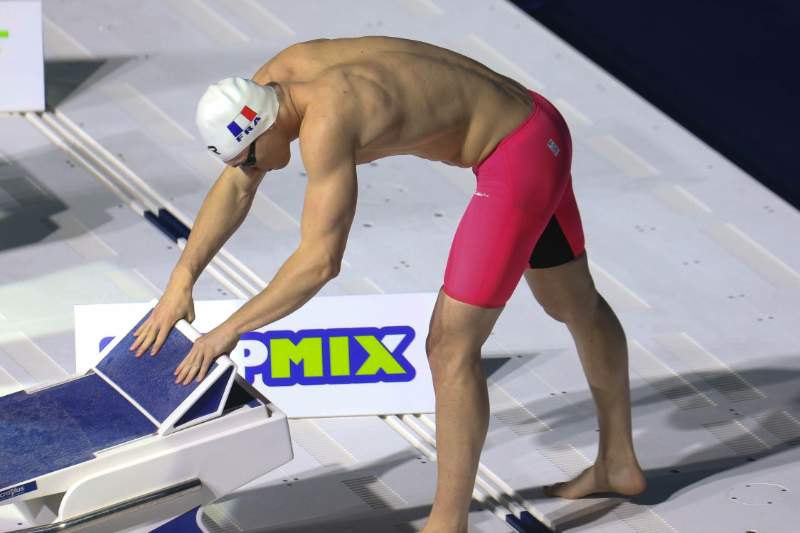
Familiar doesn’t always mean optimal, so get up on the block, play around with different settings and stances, and let the clock decide.
Block Phase Checklist for Faster Starts
The job of the block phase is generate as much horizontal impulse as possible, launching parallel across the pool with distance and velocity.
To sum up a fast and powerful block phase:
- Narrow stance
- Load the rear leg
- Strong leg positioned for power
- Kick plate adjusted to optimize joint angles
- Test, retest, and let the clock choose for you
Everything that happens after the block phase—the flight phase, entry, and the first few meters underwater—start here.
Next: how to build more power so that you explode off the starting block with controlled fury.