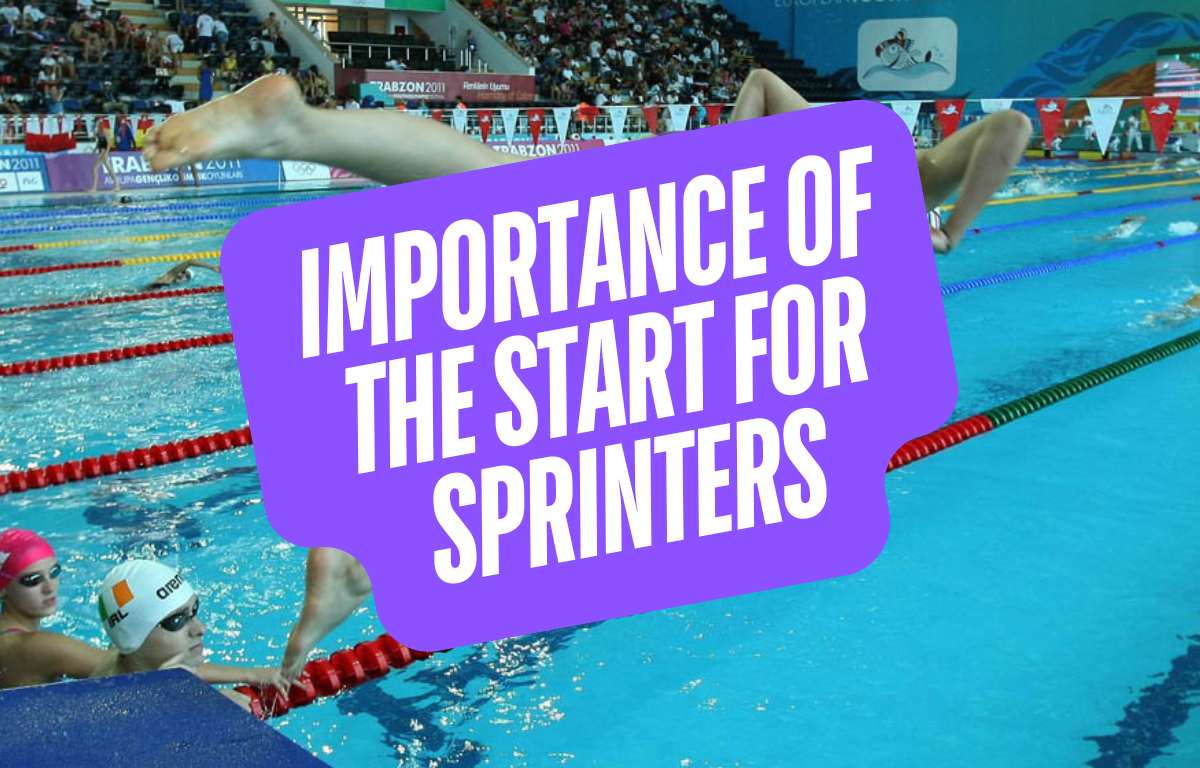

The start is critical for sprint swimming success. Here’s the case for sprinters spending more time working their starts.
How many times have you seen (or had the unfortunate pleasure of swimming against) a lightning-fast start on a swimmer who surfaces out of the breakout with a significant lead over the competition?
Names like Dressel, Tandy, Walsh, Sjostrom come to mind.
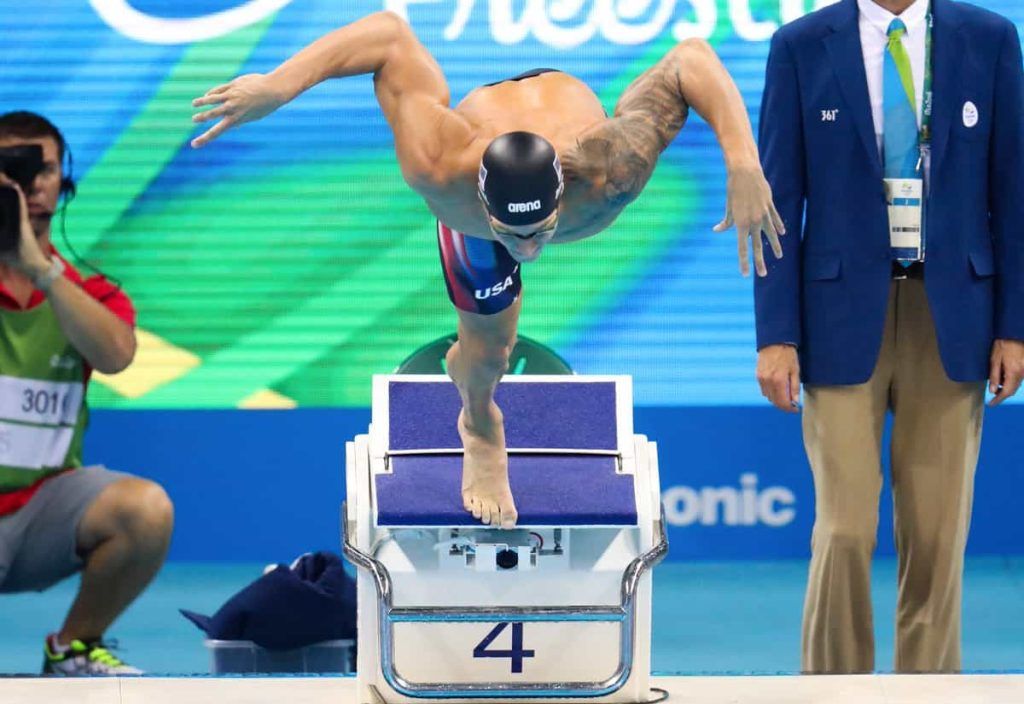
With the 50 freestyle being decided in seconds, we simply don’t have the luxury or time to try and recover from a sluggish start. That makes it essential to launch yourself off the block in a timely and powerful manner.
Sprinters should make training and perfecting the start a priority as it will lead to faster results, is responsible for a significant chunk of the event, gives you clear water, and much more.
Here’s why sprinters should be logging plenty of reps and time getting off the blocks.
This article is part of our series on improving sprint freestyle performance. Read more of our guides below.
Faster results
Okay, let’s get the obvious one out of the way. Fast starts are directly tied to faster times.
Swimmers who explode off the blocks faster post quicker results on the clock. Plenty of research with international and national-level swimmers back this up:
- A study by Tor et al. (2015) with 52 elite Australian swimmers, including 39 Olympians, found fast starts led to quicker 15m times.
- Morais et al. (2021) analyzed the performances of elite European swimmers and found that time-to-15m explained ~82% (men) and ~86% (women) of final race times. Fast starts = fast times.
A fast start is going to get you off the blocks faster, at higher speeds, and ultimately and hopefully, result in best times, gold medals, and all the glory you can dream of. It’s also time you can shave that doesn’t require more time in the water.
Large chunk of the event
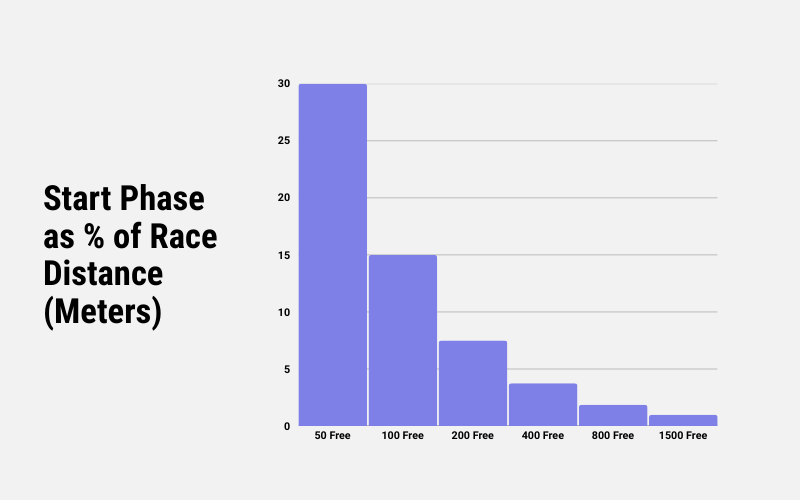
The start constitutes a significant portion of the 50 freestyle. Among all the events in the pool, it has the most impact.
How much? In terms of distance, the start is 30% of the total race in meters pools and 32.8% of a 50-yard freestyle.
Compare this to the next shortest race, a 100m event, where the start phase dips down to “just”15%, with the start’s role decreasing as the event distance increases. For mile swimmers, the start is only 1% of the total race (swimmers could cannon-ball and it wouldn’t really make a difference).
Peak velocity
Swimmers hit their highest speeds right off the blocks, moving significantly faster than anything they achieve while surface swimming.
Horizontal entry velocity—how fast swimmers are moving as they enter the water—can reach up to 5m/s (Tor et al., 2015).
By comparison, even the best sprinters on the planet max out surface speeds of around 2.2m/s. At the Paris Olympics in 2024, for example, men averaged 2.2m/s and women 1.89m/s between the 25m and 45m marks.
See also: 7 Tips for Improving Your 50 Freestyle
That means a powerful start doesn’t just look explosive and make the block rattle, it gives swimmers a major velocity advantage through the early meters.
Looking again at the performances in Paris, gold medalist in the 50m freestyle Cam McEvoy swam the first 15m in 5.11 seconds, an average speed of 2.935 m/s. His highest swimming velocity was in the stretch of meters after surfacing—from 15m to 25m—where he sped along at 2.23m/s. Speed dipped slightly by about 0.1m/s from there on out until he touched the wall at 2.14m/s.
These are fractions of a second, but they add up and it’s a reminder that the start is where you by far moving the fastest, making it a critical performance zone in the 50 freestyle.
Clear water swimming
Pools with a pack of fast-moving swimmers can get very wavey. Particularly in short course pools, with bow waves following like a flock of geese in formation, bouncing off the walls and creating significant turbulence.
A fast start gets you out ahead of the competition (or at least not stuck in their wake) and swimming out in clear water.
Psychological edge
A fast start and getting out ahead right from the beginning allow you to take control of the race, both in terms of a real-time physical lead, but also psychologically.
Nothing is more demoralizing than surfacing and looking over and staring eye-to-eye of the FINA-approved logo on the competition’s swimsuit.
See also: 7 Reasons Caeleb Dressel’s Start is the Best in the World
A fast start is a confidence-booster to help you swim even better on race day and discourage the competition and your personal best times.
There’s always something comforting knowing that when you walk across the pool deck, fasten those goggles for the 204th time, and step up into the silence to await the starter’s signal, that you’ve got the fastest start in the west.
The Bottom Line
Explosive starts are a fundamental part of what makes sprint freestyle so unique. And when it comes to the 50 free, the margin for error is razor-thin. You don’t have the luxury of easing into the race, pacing the event, or attacking the “back half” of the 50.
The start sets the tone for the rest of the race, and developing an explosive, technically proficient start happens in practice.
Bill Pilzcuk, the 1998 world champion in the 50m freestyle, famously upset two-time Olympic champion Alexander Popov to win gold at worlds on the strength of an explosive start that gave him nearly a body length lead at the 25m mark of the race.
Reflecting on how he and his Auburn teammates relentlessly drilled their starts, Pilczuk said:
Some days, when the 15m pool was open, they’d have to tell us to leave because we wanted to break the record of the pool in every stroke. Maybe 50 starts on those days. We would do at least 10 runners and 20 starts a day throughout a workout. Dean [Hutchinson–team captain at Auburn] and I would stay after and get about 10 on our own every single practice. We had to duct tape our back toes because the grip tape tore the skin off.
Make starts a focus and a priority in your regular training. Every rep you log isn’t just practice, it’s putting distance between you and your PB, so get those reps in this week at the pool.
Happy sprinting!
How Swimmers Can Improve Their Starts
This article is part of a series on teaching swimmers what they need to know about developing a fast start:
How to Optimize the Block Phase for Faster Starts
How to Build Explosive Power on the Block
What’s a Good Reaction Time for Starts?
Do Squats Predict Fast Starts?
The Best Relay Start – Long Step or Short Step?