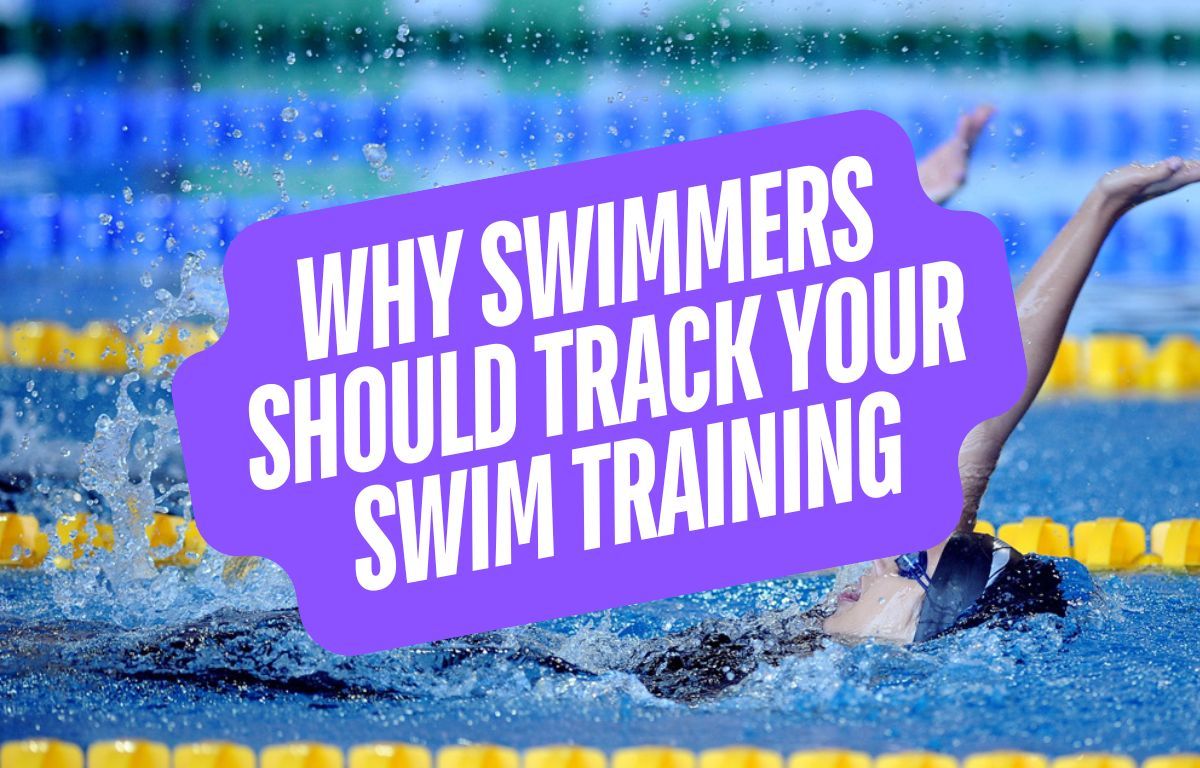

Swimming offers us no shortage of things to track and measure when it comes to sizing up our training and competition.
Outside of the big shiny outcome—overall time and placing—there is tons of data and metrics that swimmers can pull to get a better sense of their performance.
Stroke rate. Splits. Average pace. Heart rate. Stroke length. SWOLF score. Attendance. Workout effort. Heart rate variability. Sleep quality. And so on.
Swimmers who monitor this data and can see how it changes over time can better finetune their training to improve and achieve their goals in the pool.
The main reason that swimmers should track their swim training is clearer than a freshly chlorinated pool—it gives them a distinct advantage in understanding where progress is happening, where it’s not, and what to focus on moving forward.
Why Swimmers Should Be Tracking Their Swimming
Logging and tracking your swimming, whether it’s the detailed metrics available in many popular swim watches, waterproof trackers, or even the pages of a good, old-fashioned swimmer’s log, immediately gives your swimming purpose.
Tracking your swim training:
Clarity of past performance
Swimmers spend a lot of time at the pool. So much so, that as training piles up, past training and workouts begin to blur together.
Tracking your swim training keeps you honest by showing you what you’ve actually done in the pool.
Often when swimmers show up to swim meets or races with misplaced expectations, it’s because they’ve inflated their past work and attendance.
Big goals are important in the pool, but having the clarity of what you’ve actually done in the water helps make smarter goals that will motivate you for the long term.
Increased performance
The right data and metrics, monitored over time, force swimmers to be more honest about the daily effort that they are putting in to the pool.
It’s easy to say that you’ll start working harder one day, or that you’ll make that technique adjustment you’ve been putting off, or start doing more effective dryland, but having your training results front-and-center promotes more accountability.
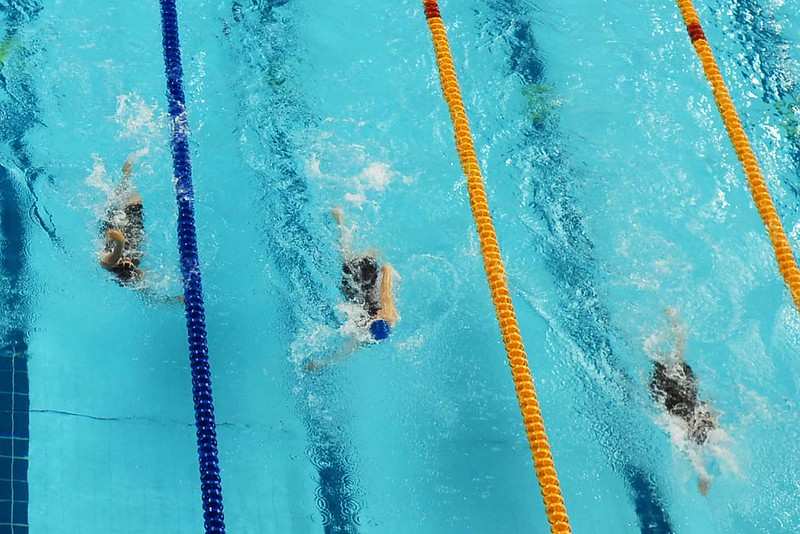
For most swimmers, this tends to be the thing to push them to take responsibility of their training, leading to increased performance.
Motivation
It’s hard to overstate the motivational benefits of tracking your swim training.
Being able to look back at previous swim workouts and training blocks, and seeing how hard you worked, how far you’ve come, and what happens when you show up and put in the work is insanely motivating.
This not only encourages you to keep showing up and keep working hard—so that you have even more cool stuff to look back on one day—but it also builds an evidence-based foundation of confidence for race day.
Tracking Swim Training Improves Workouts
That all sounds good and lovely, but how well does something as simple as tracking your swim training improve how often we show up, how well we do the workouts, and how fast we end up swimming?
Some research gives us some clues.
A study (Eisenhardt et al., 2026) with almost 60 swimmers over three months had them use either smart swim goggles—in this case, the FORM 2 Smart Swim Goggles—or printed workouts and a standard pace clock. Researchers followed how well swimmers adhered to the training program.
The FORM group, which got the benefit of real-time training feedback, were much more likely to complete the full swim workout and showed more effort when doing the workouts.
The increased adherence and better workouts plays out in other sports, too.
A group of soccer players used digital activity trackers (a fancy term for Garmin watch) over three months and saw improved workout completion rates and higher training loads (Wu et al., 2026).
An a broader meta-analysis (Peiris et al., 2023) shows that self-monitoring and feedback consistently improved long-term adherence to exercise, reminding us again that just tracking and reviewing your training can have a positive impact on performance.
Having the added layers of real-time feedback and accountability can increase how much of our swim training we do and the quality with which we do it.
What Swimmers Should Track in the Water
Okay, so tracking swim training is helpful—great news. But as we saw in the opening, there is a lot that can be measured.
Where do we even start?
Distilling the metrics into specific, actionable things that will have the biggest impact on your swimming is the next step. This will help you avoid getting swamped with metrics and being bowled over by too much information.
The goal is precision and performance.
Big picture, swimmers should be tracking:
Sleep quality
Sleep quality and duration are two of the most important things swimmers have at their disposal for faster swimming on race day.
A study by Lundstrom et al. (2025) showed that for a group of elite NCAA swimmers, sleep duration and quality were both strongly linked to how well they did in training and how fast they swam on race day.
Attendance
The simplest metric, really. How often are you showing up to the pool? How many workouts did you make this month?
In my decades in the sport, this is the one metric that swimmers always end up inflating—how often they actually showed up to the pool over the training block or season.
Having this data alone is worth the price of admission for most tracking tools.
Effort level
This is a more subjective metric, but still a very important one. Swimmers should be grading their swim workouts each time they leave the pool.
A simple 1-10 rating or out-of-five-stars rating is enough to create some accountability.
Swimming is a long haul, and there will be days where you swim really well, others where it feels like you are swimming through peanut butter. In both cases, you can still give a great effort.
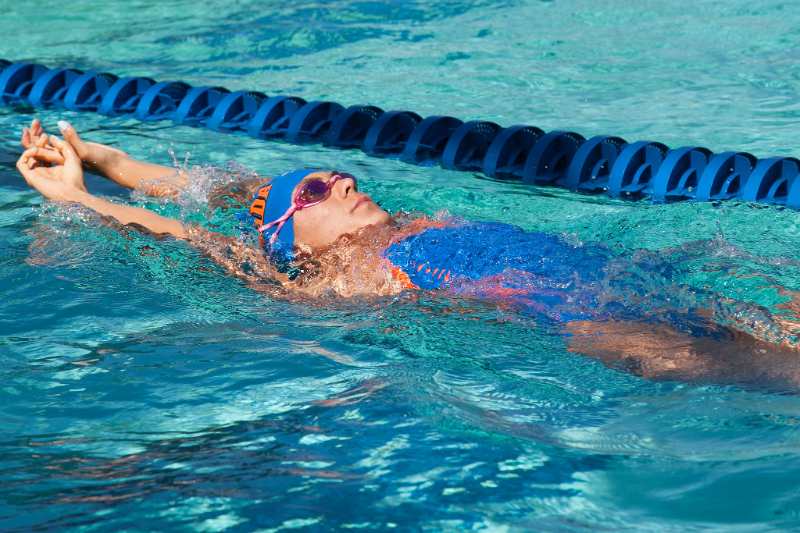
Training volume
Total training volume—how many KMs we swim in a session, week, month, training block, or season—tells us how much work we are putting in. Training volume is detailed in overall yards and meters and can give us a general snapshot of how much swimming we are doing.
These numbers—along with intensity—give us a sense of how to structure future training, recovery needs, expected performance in competition, and so on.
Getting more granular, swimmers have more detailed metrics to look at to measure performance:
Stroke length
Also known as distance per stroke (DPS), stroke length tells us how much distance swimmers cover with each stroke cycle.
Swimming is a brutally inefficient sport—much of our power and energy is wasted into turbulence and drag, even at the elite level—and stroke length is a good proxy for how efficient and how well we position our arms, legs, and body to move through the water.
SWOLF
A shorthand for general efficiency in the water, SWOLF is a combination of how many strokes you take in a lap and how long it takes for you to swim it.
Generally, the lower the SWOLF score, the faster and more efficient you are swimming. Can be handy for general trends and also for sets targeting specific SWOLF scores.
Stroke rate
Stroke rate at specific intensities can give you a sense if your stroke is falling apart under fatigue. Higher stroke rates tell us that swimmers are starting to “slip” through the water and battling increasing fatigue.
Fast swimmers hold water under fatigue, and rapidly increasing stroke rate is a standard defense mechanism when swimmers get tired.
Average pace
Pacing is a skill in swimming, and trackers and watches can show us how well we are able to pace sets and swims.
Managing energy and strategically deploying it on race day are something swimmers have to learn in training, and tracking your sets/workouts can give you a sense of how you pace.
There are plenty of other metrics that swimmers can track and measure for improved performance that we will look at in a future guide, including one of my favorites, heart rate variability.
Tools for Tracking Your Swim Workouts
There are tons of ways to track your swim training, but the “best” one for you is the one that you will actually use and pull actionable insights from.
Fortunately, swimmers have more options than ever, from the super techy options like AR swim goggles to your classic paper notebook.
Swim watches
Swim watches are the best all-around option for swimmers who want detailed workout info without data interrupting their swim training.
Most models automagically track everything, either with their native workout app or third-party swim apps, recording volume, pace, time elapsed, splits, heart rate, and so on.
Higher end watches—Apple Watch, Garmin watches—track everything outside of the pool too, from sleep to heart rate variability to anything else you can think of.
For a detailed look at the top watches for swimming, read our detailed comparison of the best swim watches.
Waterproof fitness trackers
There is a broader category of waterproof fitness trackers that can track and measure your swimming that includes watches, but also things like smart goggles and dedicated swim trackers.
Smart swim goggles are one of the coolest options and work best for swimmers who train on their own. They literally show your workout unfold in the lens of your goggle through an augmented reality display. Other trackers include multi-sport watches to head-mounted sensors like Triton Wear that measure every stroke, breath, and dolphin kick.
Heart rate monitors
Swimmers who are deeply into heart rate and zone training can be an excellent option, too. Training by feel can work part of the time in the water, but monitoring and tracking your heart rate shows you how hard you are actually working in the pool.
Waterproof heart rate monitors for swimming are simpler and can be paired to a smartphone for logging/measuring and help us control effort during aerobic sets, threshold training, and recovery workouts.
Tracked over time, heart rate also gives us valuable intel about preparedness and recovery.
A swim log
The classic, the old-school paper and pen logbook is still alive and well. Technology is great and all, but nothing beats sitting down with pen and paper and writing our swim training for reflection and motivation.
A logbook allows you to record things that watches and trackers don’t, including your comments on the workout, how you felt in the water, confidence, goals, technique cues, lessons learned, and more.
Some of my biggest breakthroughs as a swimmer cam via flipping through my log book and seeing what it took for me to perform at a high level versus another line graph.
Tracking Your Swimming Works When You Do
Swimming is a sport that deeply rewards consistency. It rewards the swimmers who show up more frequently, put in a better effort when they hit the water, and who learn from their wins and losses.
It’s key to remember that tracking all this stuff won’t automatically make you a faster swimmer overnight. But for the swimmer who feels frustrated with a lack of progress or improvement, it can show you what it takes to improve.
You’ll catch trends before they become problems. You’ll learn more about what it takes for you to perform at a high level. You’ll stop guessing about whether you are making progress and feel the motivation to chase ever-harder goals.
Whatever tool you choose, a watch, tracker, logbook, super smart goggles, the important thing is to start tracking.
Begin tracking a couple of the simple, high-impact things—attendance, effort—and build up from there.