
Motivation for swimmers—what drives it, why it fades, and proven ways to stay motivated through long seasons, hard practices, and slow progress.
Swimming requires a lot of motivation.
Early mornings, long swim meets, endless staring contests with the bottom of the pool are part of the sport.
Unlike many sports, swimming requires us to train day after day with little immediate reward. Personal bests only happen a few times each season, and progress can feel slow.
That’s why motivation is such an important mental skill for swimmers.
Motivation is what gets you to practice on cold mornings, pushes you through hard sets, and keeps you committed when improvement stalls.
In this guide, we’ll break down what motivation is, the different types swimmers use, common motivation mistakes, and proven ways to stay motivated throughout the season.
IN THIS GUIDE
What is Motivation?
Motivation is the internal and external drive that causes swimmers to take action toward their goals.
In sport psychology, motivation refers to how athletes initiate, direct, and sustain goal-oriented behavior. This shapes how much effort you apply in training, how persistent you are when workouts get tough, and even how long you stay committed to the sport across a full season—or a full career.
Motivation is what influences you to:
- Show up consistently to practice
- Push yourself during demanding main sets
- Stay committed during plateaus, injuries, and other performance dips
- Continue pursuing improvement over months or years
The reason motivation matters so much in swimming specifically is that the sport rewards long-term consistency above almost everything else.
Technique takes years. Aerobic and anaerobic systems build slowly. Dryland strength takes time. And mental toughness develops through accumulated hard sessions, not random and individual moments of inspiration.
Swimmers with a larger motivational fuel tank are far more likely to stick out the process of developing the physical and psychological qualities that lead to elite swimming.
Types of Motivation – Intrinsic and Extrinsic
Motivation isn’t one-size-fits-all. Swimmers show up to the pool for different reasons, but most motivation falls into two main categories: intrinsic motivation and extrinsic motivation.
Intrinsic motivation comes from within. It’s the desire to improve, master skills, and see what you’re capable of in the water. Swimmers with strong intrinsic motivation enjoy the process of training—the challenge of brutal main sets, refining technique, and the satisfaction of swimming their best.
Extrinsic motivation comes from external rewards or recognition. This includes things like medals, qualifying for championships, praise from coaches, or recognition from teammates and peers.
| Intrinsic Motivation | Extrinsic Motivation |
| The satisfaction of mastering a new skill | Winning medals |
| The challenge of difficult training sets | Qualifying for championship meets |
| The pride of achieving a personal best | Praise from coaches or teammates |
| The enjoyment of swimming itself | Rankings, records, or recognition |
Both types play a role. Swimmers often draw on external sources—Michael Phelps famously used perceived slights and doubters as training fuel.
In the run-up to the 2008 Beijing Olympics, Australian coach Don Talbot and legend Ian Thorpe publicly voiced their doubts about the possibility of a single swimmer winning eight golds in one Olympic Games.
This lit a fire in Phelps:
“I don’t want to say it’s more ammunition, but it kind of is,” Phelps said. “It’s just one thing I’ve always loved, just proving somebody wrong, making them eat their own words. As a kid, I just wanted to beat everybody. I do want to win all the time, but it’s also proving other people wrong.”
While the extrinsic stuff gets all the highlights and attention, intrinsic motivation is the steady, quiet, and super powerful engine that runs the show.
A 2025 meta-analysis (Alkasasbeh & Akroush, 2025) of different types of athlete motivation found that intrinsic motivation was the clear winner in terms of producing deeper engagement, more commitment, and increased persistence in training.
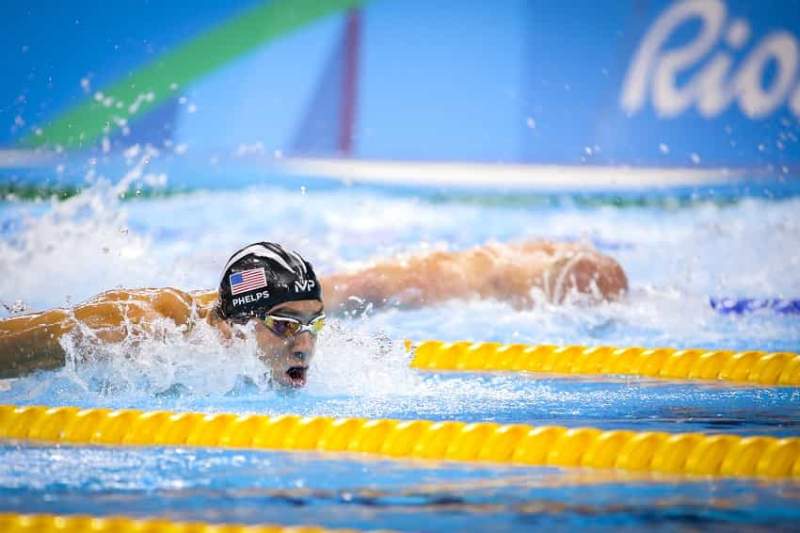
Extrinsic motivation (rewards) typically provides a short-term boost but rarely sustains long term commitment.
The same review notes that the best outcomes usually come from athletes who combine the intrinsic stuff—improvement, enjoyment, mastery—with the occasional splash of external reinforcement.
Another large study with youth athletes found that the most successful motivational profile didn’t rest solely on “wanting to win.” It was the athletes who combined high intrinsic motivation, strong goal orientation, self-determination, and low fear of failure (Schmid et al., 2021).
Wanting medals, glory, and to make the doubters eat their words isn’t necessarily bad, it’s just that they alone are not enough.
“A true champion knows how to overcome doubts and manage those doubts and turn them into motivation.”— Misty Hyman, Olympic champion
The Three Pillars of Long-Term Motivation
Swimmers who stay motivated over the long term usually have three things working in their favor: they feel like they’re improving, they feel some ownership over their training, and they feel supported by the people around them.
Competence
The surest way to motivate a swimmer is a personal best time. Nothing motivates like improvement, and that’s driven by competence. When we can truly feel like we are getting better, even if it’s incrementally, motivation swells.
Perceived competence predicts both intrinsic motivation and how long you are willing to stick with training and competition (Almagro et al., 2020). When we go a best time, or master a new interval in training, or demolish a 1RM in the gym, the motivation tank hits “full” almost immediately.
Which is why visible progress matters. Improvement doesn’t need to strictly be a PB in the water—there are tons of ways to improve and get better. Things like longer underwaters, faster race pace targets, improved stroke counts all signal that your hard work is paying off.
Autonomy
When swimmers feel a sense of control over their goals and training process, motivation goes up. Owning your training, performance, and process gives you ownership, and with that, some of that white-hot motivation.
Autonomy doesn’t mean that you take over coach’s duties writing out workouts, but it does mean that your effort is driven by the desire to pursue your own goals and improve.
Research by Taylor et al. (2025) found that autonomous motivation—training because you personally value it rather than because of external pressure—was strongly linked to persistence and well-being in individual sport athletes.
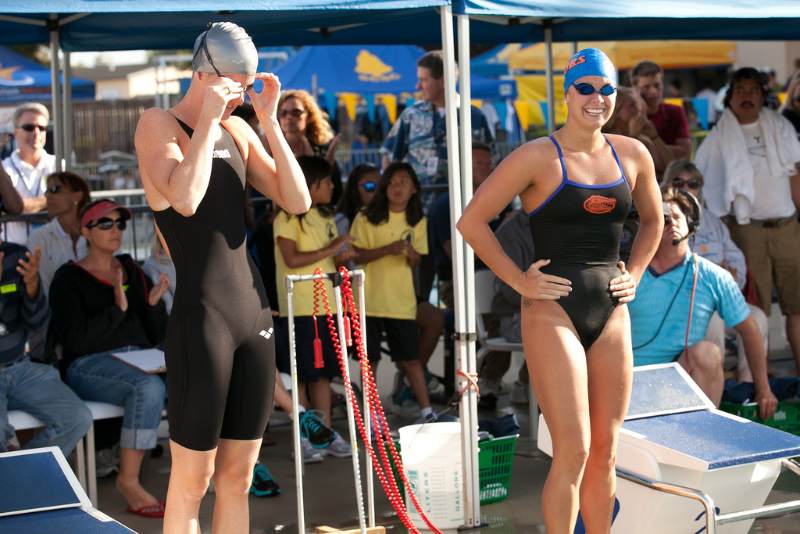
Swimmers tend to stay more motivated when they understand why they’re doing a set, have goals of their own, and aren’t just going through the motions.
Set goals that are personal and important to you, and that sense of ownership will naturally increase motivation.
Relatedness
Swimming is an individual sport, but motivation is a team skill. Feeling connected to coaches and teammates plays an important role in sustaining motivation.
A study with international-level swimmers found that coaching style, communication, team relationships, and the overall motivational climate strongly influenced how motivated swimmers felt over the course of the season (Brat et al., 2025).
While I know many swimmers prefer the “Lone Wolf” approach when it comes to motivation, when we feel supported by our peers and coaches we are far more likely to stay engaged and fired up during those taxing stretches of swimmers.
Fear of Failure: The Hidden Motivation Killer
When it comes to building motivation, we usually think about adding stuff. More hype videos. More positive self-talk. More awesome.
But sometimes unlocking more motivation requires dealing with something that is already there.
Fear of failure is one of the most underappreciated obstacles to real motivation.
Which can seem odd, because we feel fear of failure most potently at swim meets. We worry about worst-case scenarios—missing a PB, failing to make finals, a suit ripping on the start, or not swimming fast enough to justify being on the A relay.
But fear of failure’s tentacles also poison motivation in training.
Swimmers who are afraid to fail hold back in practice, avoid the kind of committed effort that risks looking bad, and struggle to find genuine enjoyment in the process.
A swimmer can have an enormous desire to succeed. But if fear of failure is dominating your thoughts, motivation becomes fragile and inconsistent.
See also: 7 Olympic Swimmers on How They Stay Motivated
Motivation and Burnout
The reason swimmers want more motivation is typically because they want to walk out onto the pool deck for practice each day like the Terminator—locked, loaded, and motivated.
But more motivation extends beyond wanting to dominate today’s practice. It also protects against burnout.
A study by Zhang and Ma (2025) examining sport motivation and burnout in 638 youth athletes found that more motivation was directly linked to reduced burnout.
Seems obvious, but the details and mechanisms are worth a look:
- Athletes with higher intrinsic motivation reported less emotional exhaustion and fewer signs of disengagement.
- Motivation increased life satisfaction, which reduced burnout risk,
- It also strengthened mental toughness, helping athletes absorb the stress of demanding training without breaking down.
For swimmers, this matters because the sport’s training demands are unusually high and rest on delayed gratification.
Double practices, long sessions in the water, and months of work between chances to (hopefully) go a best time.
This repetitive daily structure creates optimal conditions for burnout, especially for swimmers who rely solely on external rewards or whose internal drive has quietly faded.
Swimmers who genuinely enjoy the process of training, who chase improvement, mastery, and connection to the sport, are far more resilient when the grind of a long season sets in.
Motivation Works Best with Confidence
Motivation is important, but it’s not enough. That’s where confidence steps in to the conversation.
A 2025 study by Tokarska and Rogowska found that athletes tend to fall into different motivational profiles, and the most resilient group combined high intrinsic motivation with high self-efficacy—the belief that they are capable of executing what’s asked of them.
Motivation gets you to the pool and working hard in the main set. Confidence is what keeps you going when things get really challenging.
Here’s how this can play out:
- Swimmers with strong intrinsic motivation but low self-efficacy may show up consistently but buckle under pressure. We all know this swimmer—loves the work, trains their butt off but underperforms on race day.
- Swimmers with strong self-efficacy but mostly external motivation may perform in the short term but struggles with consistency over a full season. The classic “rock star” swimmer who has the swagger and can put up the occasional dazzler of a performance, but not consistently.
The best motivational profile brings both together.
This has practical implications for how you think about your training and progress. Building self-efficacy isn’t about empty praise or “fake it till you make it.” It’s accumulating real evidence in training and competition that you are improving and capable.
That’s why creating an inventory of your wins and successes, setting short term goals, and recognizing incremental improvements can be high-octane fuel for day-to-day motivation.
How to Boost Motivation
Motivation isn’t something swimmers either have or don’t have. It’s a skill that responds to specific habits, environments, and mindsets.
Here are some practical ways that swimmers can build stronger motivation throughout the season.
Set Clear Goals
Motivation drops when goals are vague and foggy. When swimmers set clear, specific goals, they show greater focus, commitment and performance improvement.
A structured study with competitive swimmers found that using SMART goals—specific, measurable, achievable, relevant, and time-based—significantly increased motivation and engagement in training (Brat et al., 2025).
Tip: Mix in process-based (i.e. “do 5 dolphin kicks off every wall”) and performance goals (“swim the first 15m of my race in 6.3 seconds”) goals to maximize opportunities for more motivation.
Instead of simply wanting to “get faster,” motivated swimmers work toward specific targets, giving daily training more meaning.
When swimmers know exactly what they are working toward, daily training feels more purposeful.
See also: Goal Setting for Swimmers – How to Set Goals That Drive Performance
Track Your Progress
Improvement is the biggest source of motivation for swimmers, and it’s not even close. It’s why we will work hard for months on end, pulling doubles, dignity-breaking threshold sets, and endless bleacher bum at swim meets–just to see those PBs on the clock.
When you can measurably see that you are improving, it’s evidence that what you are doing is working, which lights a motivational fire to keep doing it or even doubling down.
This means tracking all the important stuff in training:
- How many meters/yards you did at race pace this week
- Stroke counts and stroke rates
- Best practice times
- Max lifts in the gym
And so on.
Tracking training results gives you the evidence that your hard work is paying off. Even small improvements reinforce progress, and motivation follows right behind.
Reflect on Your Training
Motivation has an opportunity to flourish when swimmers take time to reflect on what they are doing well and where they can improve.
Simple questions after practice can help:
- What did I do well today?
- What did I improve?
- What is one thing I want to do better tomorrow?
Low motivation thrives in uncertainty. If you don’t know if you are improving, or what the goal is, or where you can improve, motivation sinks.
Use Visualization
Mental rehearsal helps swimmers connect everyday training with future performance. And that’s awesome for boosting motivation.
Instead of going through the motions at practice, take a few seconds before each set/rep and picture the skill/performance you are trying to improve. Visualize the body position you want on race day, the powerful breakout, the explosive pull.
This kind of imagery strengthens motivation by helping athletes mentally rehearse successful execution (Volgemute et al., 2025).
Visualization is one of the most powerful skills swimmers have at their disposal. One of its most overlooked benefits is that it keeps motivation high by linking what you’re doing in practice today to the performance you want on race day.
Motivation is Contagious
Although swimmers ultimately rely on themselves for motivation, there is strong evidence that the training environment plays a major role in sustaining it.
Which makes sense—we’ve all had that Debbie Downer teammate who made training feel harder than it was. And we’ve also had the opposite: the Debbie Let’s-Do-One-More teammate who supported and promoted excellence and high standards, boosting motivation along the way.
Train with swimmers who elevate your effort—whether that means jumping in the faster lane, pairing up with a teammate who holds you accountable, or simply surrounding yourself with people who take the work seriously.
Motivation doesn’t have to be a solo effort, and it grows much faster when the people around you are chasing the same standard.
Wrapping Things Up
Motivation can be a powerful force when it’s behind you.
Clear goals, visible progress, motivated teammates, and a focus on mastery can all top up your motivational tank. But even then, swimmers won’t feel fired up every single day.
Motivation fluctuates. It’s affected by sleep, stress, tough workouts, school, and a hundred other things outside of simply “wanting it.”
Elite swimmers experience the same motivational dips as everyone else. The difference is that they don’t wait for motivation to start.
More often than not, motivation is the result of action—not the prerequisite for it.
How many times have you started a workout, not feeling too great or motivated, and found that by mid-set, you were truly and absolutely getting after it?
Motivation is important—always will be. But just starting is often the ignition required to getting your motivational fire to burn in the golden hue.
This guide to motivation for swimmers is part of our series on mental training for swimmers. You can read the main guide, and other articles below.