
Training goggles are built for the daily grind. Racing goggles are made for blinding speed. Here’s how the two types of swim goggles differ in fit, comfort, and design.
Swim goggles are the second thing that swimmers reach for when hitting the pool after a quality swimsuit.
They keep water out of our eyes, help us see the pace clock, time our wall approach, and avoid head-on collisions with pool ladders, bulkheads, or errant swimmers.
And within the big pile of swim goggles available for swimmers, one of the main distinctions is between goggles designed for everyday swim training and those built for competition.
Ultimately, a goggle is a goggle. Both keep water out, help you see, and should be comfy.
But training and racing place different demands on goggles:
Training goggles generally focus on comfort, visibility, and durability as you stack the miles in the pool.
Racing goggles lean harder into a secure fit and a low-profile lens that reduces drag and stays in place at high speeds.
Here’s a closer look at how training and racing swim goggles differ and affect fit, comfort, visibility, and performance.
👉 Looking for a new set of swim goggles? Head over to my flagship guide to the best swim goggles for every kind of swimming–training, racing, youth, prescription, smart goggles, and much more. This guide focuses specifically on why training and racing goggles are built different.
Training Swim Goggles
Training goggles are the daily driver, the goggles that we wear for those early morning practices, long training camps, three-hour Saturday morning workouts.
We wear them for extended periods of time, putting them through countless meters or yards. In essence, they are riding shotgun with us during all of the hard main sets that we do to improve over the course of a season.
As a result, comfort and reliability are what matter most as opposed to shaving every last bit of drag.
The main characteristics of training goggles include:
- Larger, softer gasket. Training goggles generally use a larger gasket that sits more softly on the skin. The larger gasket spreads pressure out—reducing those pesky goggle marks post-swim—making them more comfortable. The trade-off is a slightly bulkier profile for longer-lasting comfort.
- Larger field of view. Training goggles frequently have larger lenses than racing goggles. This is helpful for swimmers in practice for a lot of reasons—you can better see the pace clock across several lanes of swimmer, you can better see other swimmers in your lane, the wall, backstroke flags, and so on.
- Easy adjustment. Training goggles tend to use straps and buckles that can be adjusted quickly. If your goggle springs a leak halfway through a lung-busting threshold set, being able to quickly tweak the head straps—or the short strap serving as a nose bridge on your Swedes—is handy. Unless, of course, you’re deploying the classic procrast-a-goggle-fix to snag a few extra second of rest.
- Anti-fog is key. Anti-fog is important for all swim goggles, but especially during training. Most races at a swim meet are over before the fog can roll in—so to speak—but during swim practice you’ve got plenty of time to work up a foggy sweat. Combine that with the warm, humid atmosphere of a swim pool and you’ve got the perfect conditions for cloudy goggle lenses.
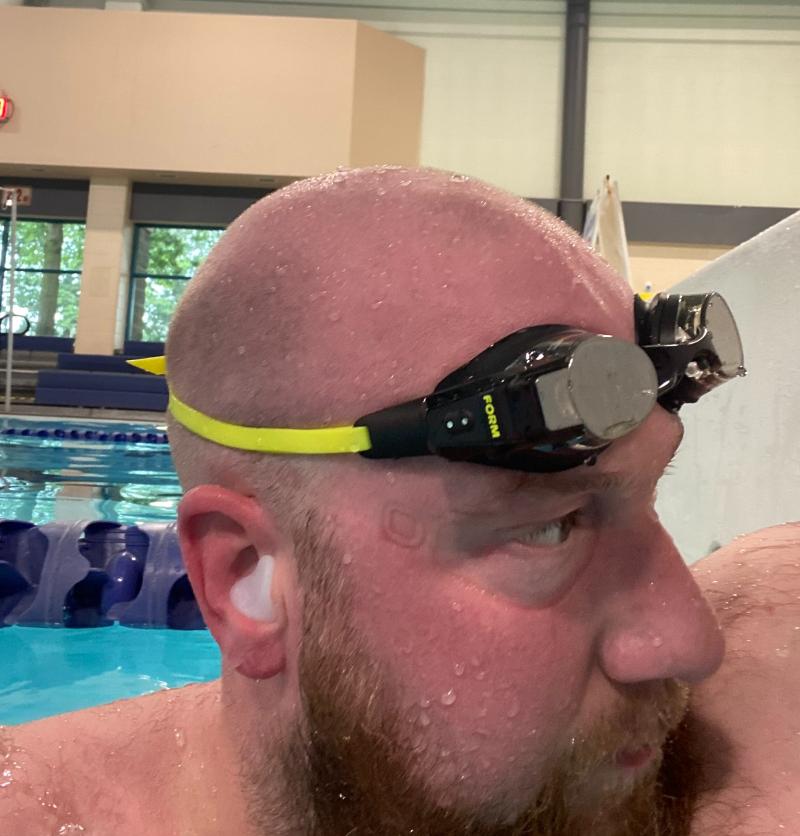
- Smart features. Training goggles also give swim nerds an opportunity to swim in data. Smart swim goggles like the FORM 2—read my full review of them here—use a heads-up display to show splits, distance, stroke rate, and heart rate while training. That extra hardware adds bulk compared to other goggles, and the real-time feedback would be a nightmare of a distraction on race day, but during practice it can give swimmers info for smarter training.
- More variety. And finally, training goggles come in a much wider range of shapes, sizes, and styles. You’ve got your Swedes, Vanquishers, cushy gasket goggles, prescription lenses, oversized rec/fitness goggles, smart goggles, and everything in-between. Racing goggles converge around the same general template—small, low profile, and locked down. The variety of training goggles means more freedom to choose for comfort, vision, tech, general color/style combos.
Training goggles are built for the reality that you are going to be wearing them a lot.
Racing Swim Goggles
And then we got our speedier racing swim goggles.
Comfort obviously still matters—you don’t want your goggles slicing into your face behind the blocks—but it’s not the important thing.
Instead, we want swim goggles that reduce drag and stay in place when it matters, like when diving into the water, pushing off, and sprinting our chlorinated hearts out at finals.
Racing goggles typically have:
- A lower, speedier profile. Racing swim goggles sit closer to the face and don’t project as far out from the eye sockets. The reduces your frontal profile, and as we will see, helps water flow more smoothly across the face at high speeds.
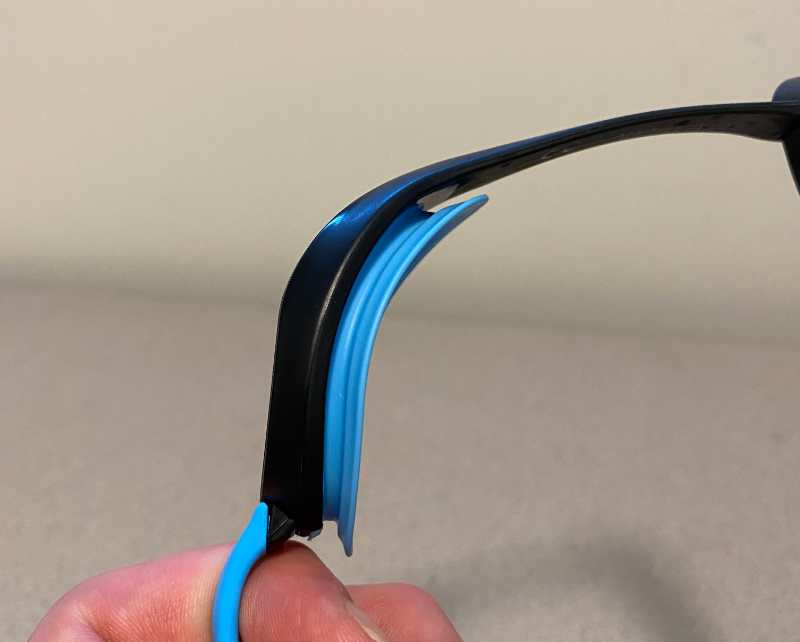
- Smaller gasket. These goggles use lighter, smaller, and thinner gasket. This allows the goggles to sit deeper in the eye socket. The thinner gasket can be so thin that in some cases—as with the Arena Cobra Ultra Swipes when I tested them—your eyelashes will brush up against the lenses.
- A tighter fit. Racing goggles generally feel more snug compared to training goggles. And it’s not just because swimmers like to crank on the head straps for extra security on race day. A study (Kumar and Bisht, 2019) showed that even when goggle straps used the same tension, smaller goggles produced way more intraocular pressure compared to larger goggles. The smaller eye socket itself creates a tighter, higher-pressure fit.
That low-profile design doesn’t just make swimmers look sleek and ready-to-rock on race day.
A study (Marinho et al., 2021) used computer simulations to compare the impact of three different swim goggles on water flow and drag around an elite swimmer’s head at 2.0m/s:
- Swedes – 11.83N of head drag
- Nikko goggles (oval-shaped swim goggles) – 12.40N
- Ankor goggles (narrower vertically—comparable to first gen Speedo Vanquishers) – 12.51N
The biggest difference came from pressure drag—the resistance that water creates when it runs into the face and goggles and has to flow around them.
The lower and flatter the goggles sit on the face, the smoother the path for water to flow from the forehead over the eye sockets. Less disruption, less drag.
Key Differences at a Glance
Let’s break down the differences between practice and competition goggles:
| Training Goggles | Racing Goggles | |
| Profile | Larger and bulkier | Lower and flatter against the face |
| Gasket | Wider, softer gasket | Smaller, thinner gasket |
| Fit | More forgiving around the eye socket; less intraocular pressure | Tighter, more compact fit; trading raccoon marks around the eyes for performance |
| Field of view | Wide, panoramic | Can be more restricted |
| Drag | Larger profile can create more disruption to water flow | Low profile helps smooth water flow over the eye sockets |
| Goggle design variety | Wide range of shapes and sizes | Designs tend toward a similar low-profile shape |
| Smart training features | Smart goggles can display training metrics in real time | Not ideal; too bulky and will distract a swimmer |
| Anti-fog | Essential; pools are hot and humid and we are sweating up a storm | Not as essential; races are over in seconds or minutes |
| When to use them | Long swim workouts, general swim training | Race day! |
These differences are all about training and racing in the pool. Open water introduces a whole new set of challenges and demands–see this guide to pool vs open water swim goggles for how those differ.
Can You Train in Racing Goggles?
Yes, and many swimmers do. The distinction between training and racing goggles is certainly not a hard line.
One big reason is familiarity. Performance-minded swimmers want fewer surprises on race day, and using the same goggles as training and competition is one less thing to stress about at a swim meet.
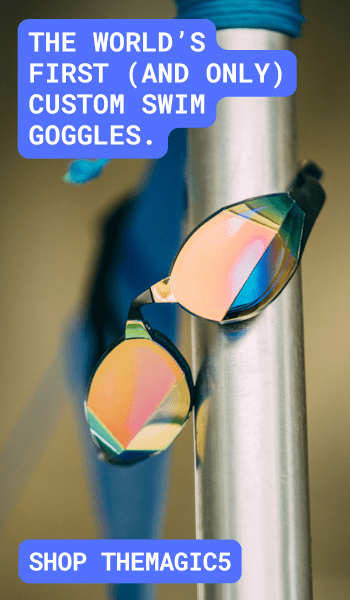
Plenty of swimmers train with goggles that are low profile—goggles like TheMagic5, Speedo Speed Sockets, Swedes, Arena Cobra Ultras come to mind.
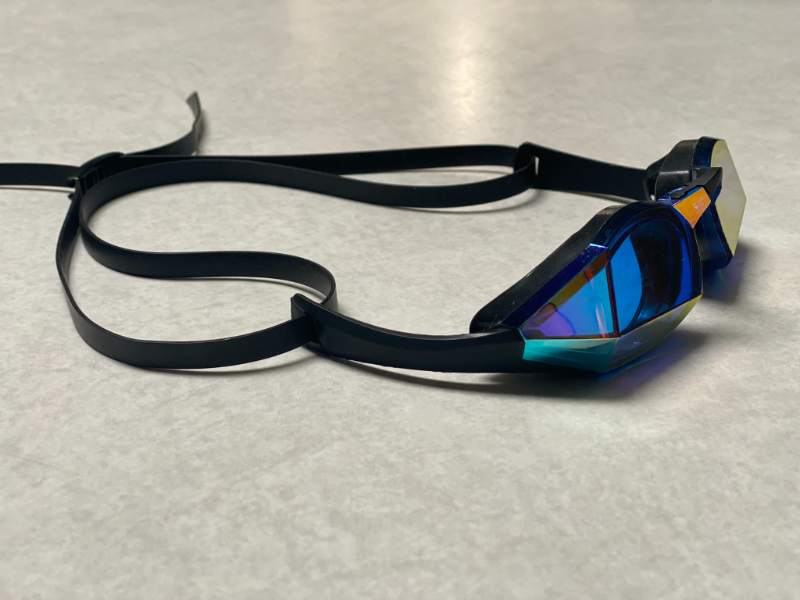
What keeps many swimmers—and especially swim moms and dads—from doing this is cost. Racing swim goggles can be significantly more expensive than your standard training swim goggle.
And the reverse can also be true.
There’s nothing in the rule books stopping a swimmer from racing in their everyday training goggles. A comfortable goggle that stays in place and doesn’t leak and most importantly—doesn’t jostle and spring a leak on the dive—can do the job just fine.
The distinction describes design priorities and not hard rules about where and when swim goggles can be worn.
The Bottom Line
Swim goggles are one of those pieces of swimming equipment that swimmers would rather not have to think about. Because if we are thinking about them, it’s usually because they are leaking, foggy, or uncomfortable.
Training and racing goggles both strive to solve those problems, but do so in a way that is optimized around the specific demands of practice or swim meets.
And understanding those sometimes big and sometimes subtle differences can help you with the ultimate goal of every goggle on the market:
Forgetting that you’re wearing them so that you can focus on swimming well and swimming fast.