
Most swimmers set goals backwards. Here’s how the research says goal setting actually works and how to build a system that drives real performance in the pool.
Goal setting in theory is very easy—think up something awesome that you want to achieve, a personal best time, Olympic gold, making that state cut, and boom. Big goal, big gold.
But there is a big gap between wanting something and actually doing it. When it comes to goal setting, swimmers often set vague, outcome-only, no-system goals that are more fanciful thinking than strategic target.
In this guide to goal setting for swimmers, we’ll look at why swimmers should set goals, the different types of goals, and discuss ways to make goals work for you in the pool.
IN THIS ARTICLE
Why Goal Setting Matters for Swimmers
Goal setting is a mental training skill that involves the process of identifying specific, measurable objectives we want to achieve in the pool. From there, we build a dynamic and actionable plan to reach them.
While goal setting is often treated as a one-and-done activity, something swimmers do at the beginning of the season when thinking about what they want to achieve when the season closes, it’s much more of a bottom-up process than that.
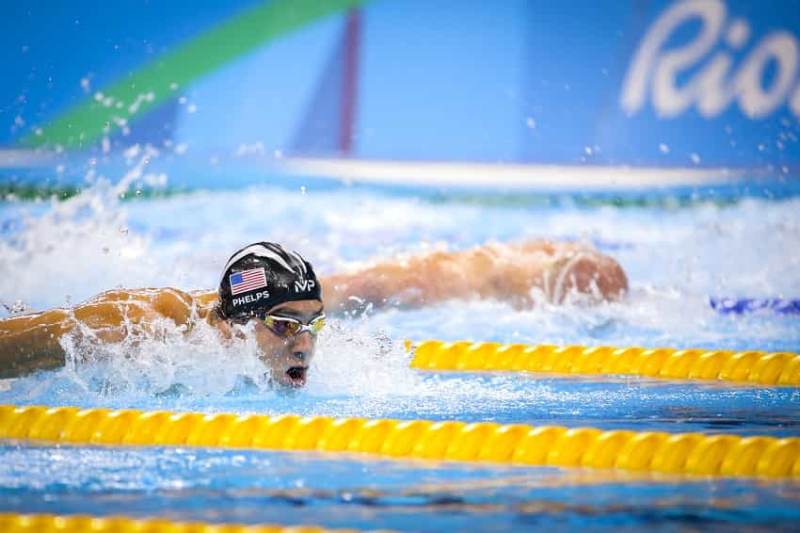
And the research backs this up.
A study (Ferchichi et al., 2026) with competitive swimmers found that when they have clear, specific goals, they improved more compared to a control group who focused on “doing their best.” Swimmers with clear goal times improved 100m freestyle performance by 4.5%, while the “do your best” group improved by 2.6%.
Goal setting is also one of the most studied interventions in sport psychology, with over 1,400 publications on the topic since 1985, and meta-analyses consistently show it has a positive effect on sport performance (Bird et al., 2024).
Setting goals is important for swimmers as they:
- Give us motivation all season long
- Provide purpose and focus during training
- Boost confidence via short-term/training goals
- Teach us how to build a long-term process to achieve something big
Goal setting isn’t just for swimmers looking to go to the Olympics or win NCAAs.
It’s a foundational mental training skill swimmers should develop in their pursuit for personal excellence, regardless of if it smells like chlorine or not.
The Three Types of Goals Swimmers Should Set
Goals come in several different flavors, and once you understand the different types you can wield them more effectively for success in the pool.
The three types of goals for swimmers include:
Outcome goals
These are the easy ones in a sense—the big, goosebump-inducing end-of-season goals that we fantasize about at night before we doze off. Outcome goals are the Big GoalTM. Olympic gold. Making the Worlds team. Winning states.
The problem, a lot of the time, is that outcome goals are largely out of your control. You can train perfectly all season, nail your taper, execute a perfect race strategy—and still place second.
Outcome goals are a good north star, but as we will see, aren’t what really drives improvement in the pool.
“I think goals should never be easy, they should force you to work, even if they are uncomfortable at the time.” – Michael Phelps
Performance goals
Performance goals are the specific, measurable targets that accumulate into the larger, overall goal.
They can include:
- A target split or pace time.
- A time-to-15m split.
- Faster underwaters.
- Improved conditioning.
- Strength in the gym.
Performance goals are the things you can actually measure and track and are far more in your control than outcome goals.
“I like to make my short-term goals something that makes me feel better and sets me up to better prepare for the long-term goals.” – Jessica Hardy
Process goals
Process goals are the daily behaviors and actions that drive everything else—how you show up at the pool, both figuratively and in terms of training output.
Process goals include:
- Hitting your kick count off every wall.
- Giving a 9.5/10 effort on the main set every day.
- Going to bed before 9:30pm every night.
- Eating clean dinners.
- Doing dryland without cutting corners.
Process goals don’t get the same attention as the Big Goal because they are unglamorous—but they are the actual star of the show.
| Goal Type | What It Is | Examples |
| Outcome | The big, shiny end result you’re chasing | Win Olympic gold; finish top 3 at States; make National team; break 50 seconds in 100 free |
| Performance | Specific, measurable targets that build toward the big goal | Improve time-to-15m; break 1:30 for 100 freestyle kick; do 500m straight of 1500m race pace in practice; hold 26s on the 4×50 free pace set |
| Process | Daily behaviors, habits, and actions that drive everything else | Push-off with a perfect streamline every time; give a 9.5/10 effort during every main set, 5 dolphin kicks on every wall; 100% attendance all month; show up 15 minutes early to practice for core/mobility work |
Most swimmers will set big, shiny outcome goals and stop there.
But research shows that this is the upside down approach if you are serious about results.
While goal setting, and the results it produces, is typically viewed from the top (outcome) down (process), studies with goal setting models and athletes shows that process goal achievement feeds performance goals, which in turn drive outcome goals.
This should make sense when we break down the process (pun intended)—the cascade of results runs bottom-up, not top-down.
Swimmers tend to view it in the opposite direction, and then wonder why the Big Goal isn’t magically turning into results.
How to Write Goals That Work
Writing out your goals is essential. Goal-minded swimmers often write out their goals in their training journal or post them somewhere visible where they can see them.
Michael Phelps kept his goals bedside.
Katie Ledecky had her goals for the Rio Olympics on her pull buoy at practice.
Goals that live in your head tend to stay there.
The standard advice for writing goals is the SMART framework (Specific, Measurable, Achievable, Realistic, Time-related). And the principles behind it are sound—vague, hazy goals produce vague, hazy effort.
But SMART goals aren’t the whole story. Research with athletes show that specific goals aren’t automatically better than non-specific ones, and moderately challenging goals can actually outperform highly difficult goals in sport settings.
The sweet spot is a goal that stretches you without destroying your confidence when things get tough.
Make them measurable
A goal you can’t track is a wish. Set clearer-than-a-freshly-chlorinated pool criteria for your goals.
This gives you objective feedback and a way to evaluate progress, which in turn boosts self-confidence, which then boosts motivation to work harder in the moments you aren’t making progress.
Concentrate your effort
If goal setting is good, then setting a ton of goals is elite, right? Not quite. The more goals you write up, the more your focus and effort gets scattered.
Which means that you should prioritize ruthlessly.
A useful way to filter a bunch of goals is ranking them by how much performance benefit they offer versus how much effort they require to implement (Symonds & Tapps, 2016).
Whatever sits in the high-benefit, manageable-effort category gets your attention first.
Adjust difficulty by context
One advanced goal setting technique swimmers should consider is setting harder goals in practice and more realistic goals for competition. Why the distinction?
Practice is for pushing limits, where you can really get aggressive in terms of pushing performance. Competition is where the point is to perform under pressure and protect confidence.
The simple, quiet benefit of pushing harder and harder goals in training is that you will be better prepared for competition.
“The impossible is what motivates me everyday to go to the pool. It’s so satisfying, so epically rewarding when you start chipping away at those idealistic goals. Nothing has made me more committed to my training than choosing a scary goal and taking the steps to go after it.” — Katie Ledecky
Own your goals
There’s a meaningful difference between a goal your coach set for you and a goal you set for yourself.
Research consistently points to athlete ownership—not just participation, but genuine autonomy in this part of the process—as one of the strongest drivers of goal commitment (Kingston & Wilson, 2008).
Ask yourself honestly: whose goal is this? If the answer is that it’s your coach’s, or your parent’s, it’s going to be a long season.
Pair goals with a plan
A goal without a strategy attached to it is just a deadline, which can start to loom over us instead of inspire us without a plan of action.
For each outcome goal, identify the specific behaviors and habits that will propel you toward it.
“The process is where the real work happens, where you grow, learn, and push your limits. If you don’t find joy in that, then even achieving your goal might not feel as fulfilling as you expected.” — Sarah Sjostrom
Identifying the barriers that will likely get in the way—both internal (low confidence after a bad swim meet) and external (packed school schedule) are both worth naming in advance.
The season is long, and while there will be obstacles along the way, navigating them with a plan ahead of time puts you in rarefied goal setting waters.
Performance work, not busy work
Swimmers can often mistake “busy” work—like watching endless technique videos on YouTube, shopping for a new training suit—as goal work. May feel productive, but it isn’t.
The filter is simple, will this specific action bring me closer to my goal?
- Showing up 15 minutes early to practice each day to work on my start—yes.
- Meal prepping healthy dinners for the week every Sunday night—yes.
- Doom-scrolling swim content on your phone past bedtime—no.
When building out process goals, be honest about what drives improvement and what is noise.
How to Review and Adjust Goals
Goals are a dynamic process. Yes, the big, outcome goal may remain the same over the course of the season, but elite swimmers live in reality, adjusting their approach as circumstances develop.
Goal revision isn’t a failure or sign to give up, but one of the smartest things you can do. Continuing to chase an unattainable goal can be detrimental to performance and wellbeing (Ntoumanis et al., 2014).
Adjusting goals in response to changing circumstances is an adaptive, healthy self-regulatory move.
“Without goals, training has no direction.” — Natalie Coughlin
(Goals get adjusted in both directions, too—sometimes you surprise yourself, making more progress than you anticipated.)
A simple review structure to keep your goals relevant and motivation running white-hot includes:
Regular check-ins
Every 4-6 weeks, sit down with your training log and honestly appraise your training.
What’s working? Are you on track? What needs to shift? Can more pressure/performance be applied to certain parts of your training?
Self-monitoring is an essential part of training adherence, which is a fancy way of saying that commitment to your goals and training goes up when we review progress.
It’s especially important in the early weeks of a new goal cycle (Harkin et al., 2016).
After a rough meet
Bad performances happen to us all. Even the best swimmers on the planet underperform on occasion. These performances are information, not a verdict.
Look at what your process and performance goals were, assess where the gap is, and adjust accordingly.
Competition is a reflection of the preparation we did, and the feedback is priceless for moving forward.
When life changes
Injury, illness, change in coaching, the program gets cancelled—any of these things can affect a big goal. Whatever you are going through, it’s worth sitting down with your goals and reflecting on what needs to be adjusted.
Use a training journal to review goals
One practical tool worth adding to your review system—a training log where you track goal progress over time.
The simple act of writing out your workouts, meet results, and reviewing your own performances is linked to increased adherence and better goal outcomes (Young et al., 2009).
Set Better Goals for Faster Swimming
Becoming a gold medal goal setter is about more than just having big goals—that’s the easy part! It’s a dynamic, ongoing process that requires different kinds of goals, building a real plan, owning the process, and adjusting when things change.
By all means have big goals, but have the matching ambition in terms of structuring and building a system to achieve them.
Which means:
Start with the process goals. Let them flow into performance goals. Which will create a powerful momentum into the big outcome goals.
The goal was always there, and now you have the process that is worthy of it.
This guide to goal setting for swimmers is part of our series on mental training for swimmers. You can read the main guide, and other articles below.